A Problem Hidden in Plain Sight
Every month, without fail, millions of adolescent girls across Sub-Saharan Africa face a quiet crisis that their male classmates never have to think about. It does not make the news. It rarely enters policy conversations. And yet it is consistently robbing girls of something they cannot afford to lose: the time with their friends and colleagues in the classroom.
According to a 2016 World Bank report on Education for Global Development, school girls in Sub-Saharan Africa miss as much as 20% of their school days in a year because of their menstrual cycle. Stop and sit with that figure for a moment. One in every five school days, gone — not because a girl chose to stay home, not because she lacks intelligence or ambition, but because she does not have access to something as basic as a sanitary pad.
This is not a minor inconvenience. It is a structural barrier. And like all structural barriers, it compounds over time to widen the gap between girls and boys in academic achievement, confidence, and ultimately, economic opportunity.
Why Adolescent Girls Are Missing School During Their Periods
The reasons are layered, and it is important to understand all of them because a solution that only addresses one will fail the others.
The affordability crisis
Conventional sanitary pads are a recurring expense that many low-income families in Nigeria and across Sub-Saharan Africa simply cannot budget for consistently. When the choice is between food and sanitary products, menstrual hygiene loses. Girls show up to school unprotected, anxious, and vulnerable to embarrassment or they do not show up at all.
The stigma and silence
In many communities, menstruation is still treated as a taboo subject — something shameful, something to hide, something that must never be spoken about openly. Girls who grow up in these environments do not just lack sanitary products. They lack the language to ask for help, the confidence to seek information, and the social permission to treat their bodies with the care they deserve. Shame, it turns out, is as effective a school barrier as poverty.
The knowledge gap
When menstrual health education is absent at home, at school, and in the community, girls are left to navigate one of the most significant biological transitions of their lives without guidance. Fear, confusion, and misinformation fill the space that proper education should occupy.
Any serious effort to keep girls in school must reckon with all three of these dimensions at once.
Gender Equity Cannot Happen Without Menstrual Equity
Here is a truth that development discourse is slowly catching up to: you cannot build a gender-balanced community while ignoring menstruation.
Girls cannot be expected to compete academically, professionally, or socially on equal terms with their male peers when they are losing 20% of their school year to a preventable problem. The vision of a community where women and men stand on equal footing (where a girl does not need to be pitied for opportunities but is physically and psychologically fit to compete) remains out of reach as long as something as manageable as menstrual hygiene is left unaddressed.
This is not charity. It is justice. And it is a strategy. Investing in a girl’s ability to stay in school every single month is investing in everything she will become — the entrepreneur, the scientist, the farmer, the leader, and the mother who will raise the next generation differently.
What Lead Transformation Initiative Is Doing About It
At Lead Transformation Initiative (LTI), menstrual hygiene is not treated as a side programme or a one-off gesture. It is embedded in the broader work of gender inclusion and girls’ education as a direct, practical intervention designed to remove real barriers.
The approach has two components that work together deliberately: Education and Production.
Education
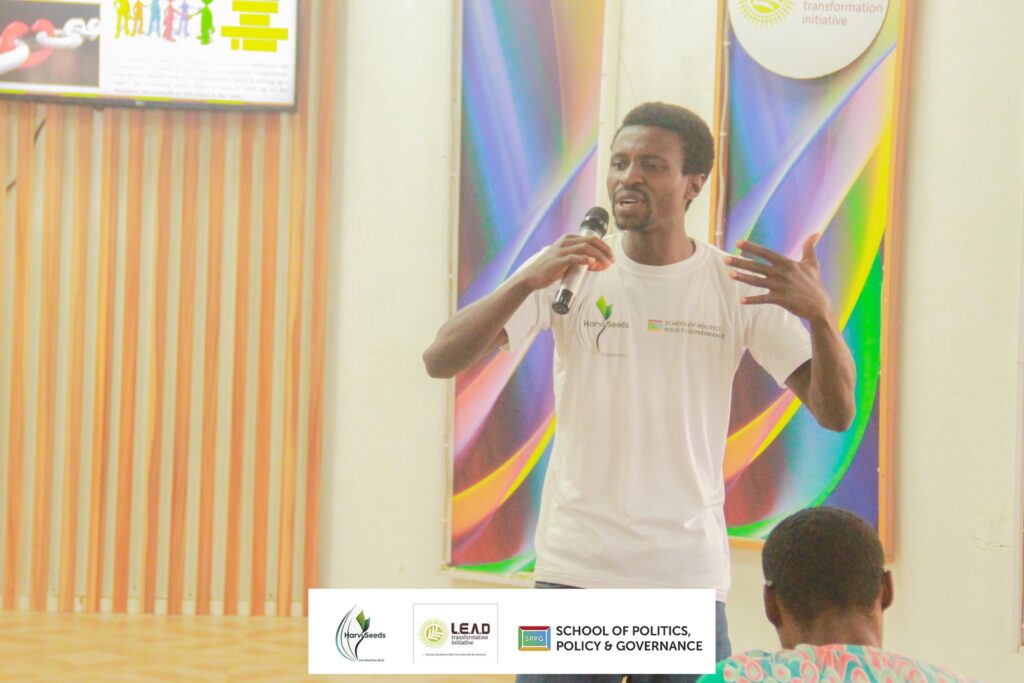
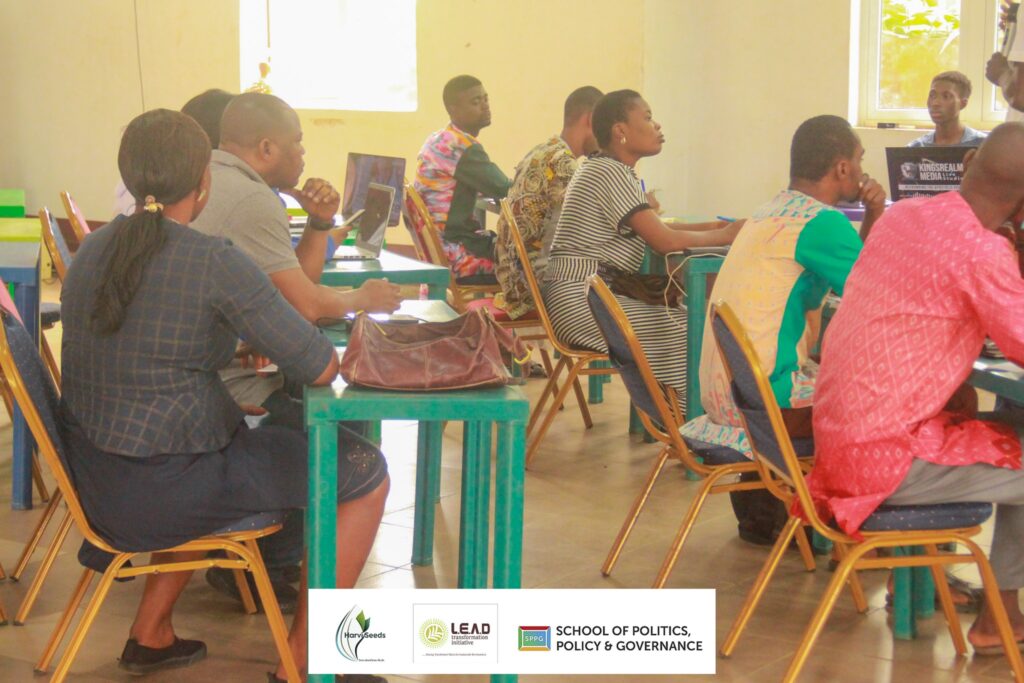
LTI’s trained facilitators go directly into schools to meet girls where they are. They break the silence around menstruation, provide accurate health information, and create safe spaces where young girls can ask questions, share experiences, and begin to shed the shame that many of them have been carrying since their first period.
Production
Girls are trained to make their own reusable sanitary pads — a skill that addresses the affordability crisis in a sustainable, dignified, and empowering way. Rather than depending on a product they may not always be able to afford, girls learn to produce something they will always have access to.
Taking the Training to Schools in Ondo State
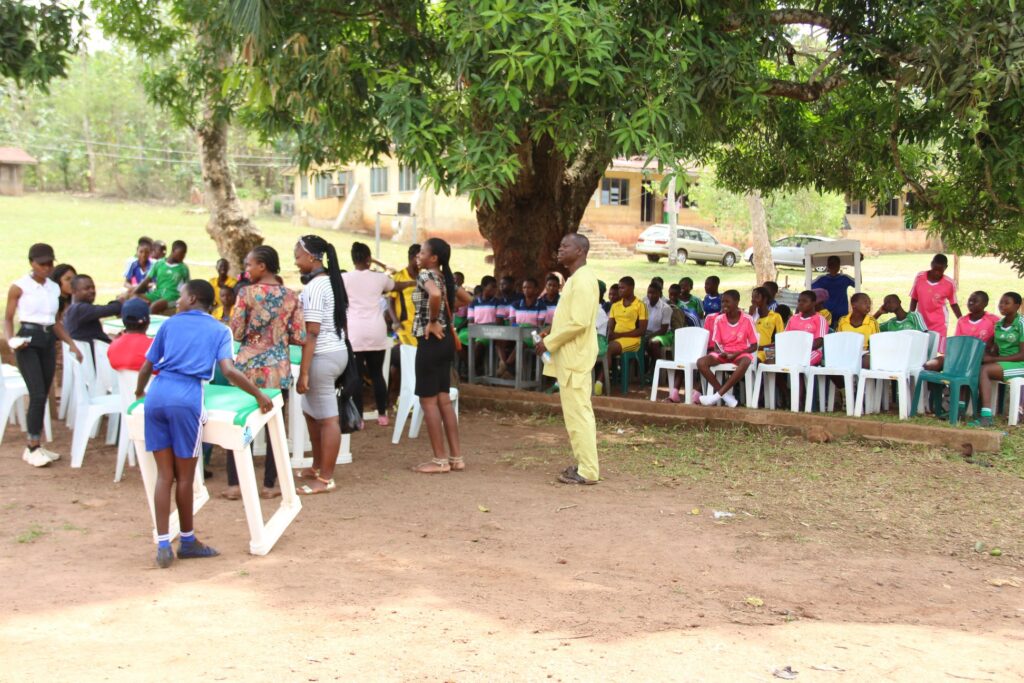
In a recent intervention, LTI’s trainers visited two secondary schools in Ondo State:
- Just Once Model College, Akure
- Community Grammar School, Ilara-Mokin
At both schools, young girls received hands-on education on menstrual hygiene management and participated in practical training sessions on producing reusable sanitary pads. The sessions were facilitated with warmth, expertise, and a clear commitment to making every girl in the room feel seen and respected — not lectured at.
This is how you break a cycle. Not from a distance, but by showing up in the spaces where girls already are, speaking their language, and leaving them with both knowledge and a tangible skill.
Why Reusable Sanitary Pads Are a Game-Changer
The decision to train girls in the production of reusable sanitary pads rather than simply distributing disposable ones is a deliberate and important one. Here is why it matters:
Sustainability
Reusable pads, when properly made and cared for, can last for months. One set of pads produced during a training session can keep a girl in school consistently across multiple menstrual cycles, rather than only solving the problem for one month.
Economic empowerment
A girl who knows how to make a reusable sanitary pad has a skill. She can make pads for herself, for her sisters, for her community. In time, that skill can become a source of income — a micro-enterprise that begins from the most personal of needs.
Environmental benefit
Disposable sanitary pads contribute to waste in communities that often already struggle with waste management infrastructure. Reusable alternatives are gentler on the environment, which aligns with the broader sustainable development values that LTI brings to all its work.
Dignity and agency
There is something quietly powerful about a girl who can provide for her own menstrual needs, who does not have to depend on a system that has historically let her down, or beg for a product that is a basic necessity. That self-sufficiency changes how she carries herself. It changes what she believes she is capable of.
The Ripple Effect of Keeping Girls in School
It is worth tracing what actually happens when a girl does not miss 20% of her school year.
She keeps up with her coursework. She maintains her confidence. She participates in class discussions and sits for exams without gaps in her preparation. Over time, she graduates. She pursues further education or enters the workforce. She earns an income. She makes decisions about her own life. She raises children who grow up seeing educated women as the norm, not the exception.
Each of these outcomes has been studied and documented across decades of development research. The return on investment for girls’ education is among the highest of any development intervention. And menstrual hygiene management, that is unglamorous, intimate, and often underfunded, is one of the most direct levers available for improving girls’ educational continuity.
We cannot claim to care about girls’ education while leaving this conversation on the table.
What Communities, Schools, and Partners Can Do
The work LEAD Transformation Initiative (LTI) is doing in Akure and Ilara-Mokin is replicable. It does not require enormous budgets. It requires willingness from schools, from community leaders, from parents, and from organisations that have the capacity to show up.
Here is what meaningful support looks like in this space:
For schools: Create safe, consistent spaces for menstrual health education. Train female teachers as the first points of contact for girls navigating menstrual challenges. Ensure school toilet facilities provide girls with the privacy and hygiene infrastructure they need.
For community leaders: Help dismantle the stigma by speaking openly about menstruation as a normal, natural part of life and not a source of shame. When community leaders normalise this conversation, families follow.
For development organisations and donors: Fund and scale programmes that combine menstrual health education with sustainable product training. Prioritise solutions that build long-term capacity rather than one-time handouts.
For everyone: Talk about this. Share this article. Refuse to let menstruation remain a whispered, embarrassed subject while millions of girls pay the price of that silence with their education.
Every Girl Deserves Every School Day
Twenty percent (20%) of school days is not a statistic. It is Monday through Friday, reduced to Monday through Thursday every week, for every girl who cannot afford a pad or has been taught that her body is something to be ashamed of.
That is not acceptable. And it is not inevitable. When we invest in menstrual hygiene education, when we equip girls with the skills to care for themselves sustainably, and when we actively dismantle the stigma that keeps this issue in the shadows, we are not doing girls a favour. We are simply removing an obstacle that should never have been placed in their way to begin with.
At Lead Transformation Initiative, this work will continue in more schools, in more communities, with more girls who deserve to be in class every single day of the month, because a girl who stays in school changes everything.
For partnership inquiries and support, reach out to LTI directly.